Renovating a bathroom for aging in place
By Royce Soon · Updated 2026-07-31
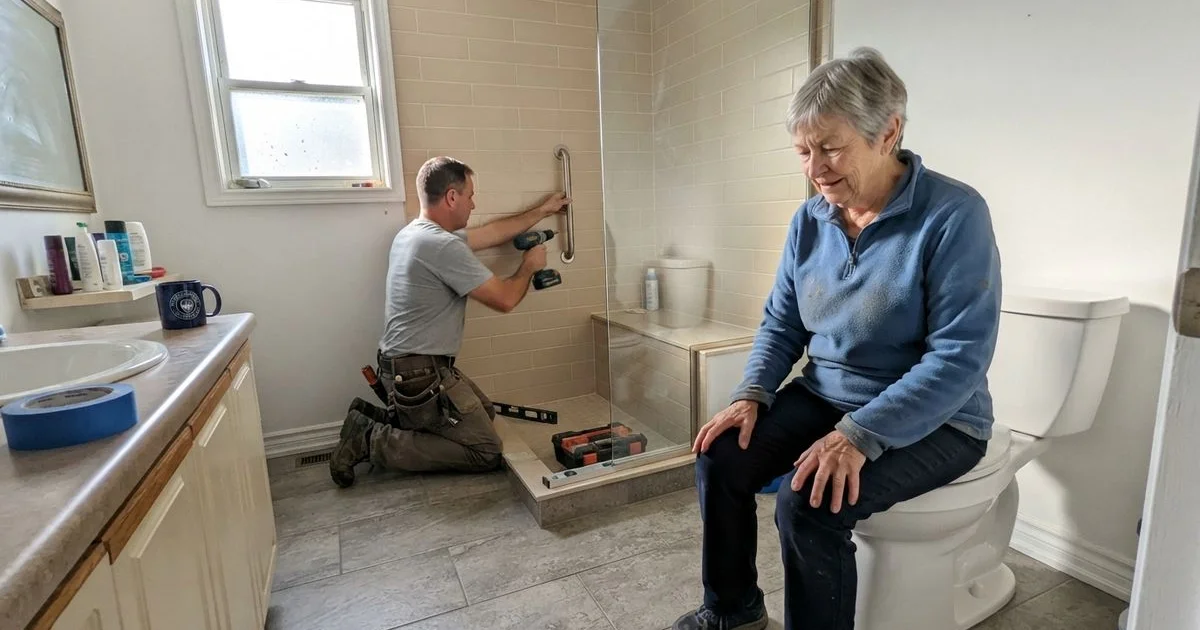
Renovating a bathroom for aging in place is a different project than a typical cosmetic update, even though it can use many of the same materials and finishes. The priority shifts from how the room looks to how safely and independently someone can use it, whether that’s an aging parent or planning ahead for your own future in the home.
The upgrades that matter most
| Upgrade | What it addresses |
|---|---|
| Curbless or low-threshold shower | Removes the trip and step-over hazard of a tub or high curb |
| Grab bars, properly anchored | Support during transfers, especially near the toilet and shower |
| Bench or fold-down seat in the shower | Reduces fall risk for standing balance issues |
| Comfort-height toilet | Easier to sit and stand from than a standard-height toilet |
| Lever-style faucet handles | Easier to operate for limited hand strength or grip |
| Non-slip flooring | Reduces slip risk, especially when the floor is wet |
| Wider doorway (32 inches or more) | Accommodates a walker or wheelchair if needed later |
These upgrades sit on top of a standard remodel’s baseline price, so it helps to know what a bathroom renovation typically costs in the GTA before pricing out grab bars, a curbless shower, and the other adaptations above.
Why grab bar installation matters more than it seems
A grab bar is only as strong as what it’s anchored into. Bars installed into standard drywall anchors can pull loose under real weight, exactly when someone is relying on them during a fall or a difficult transfer. A contractor doing this work correctly anchors grab bars into wall studs or blocking installed specifically for that purpose, which sometimes means opening a section of wall during the renovation rather than adding bars after the fact.
Curbless shower vs walk-in tub
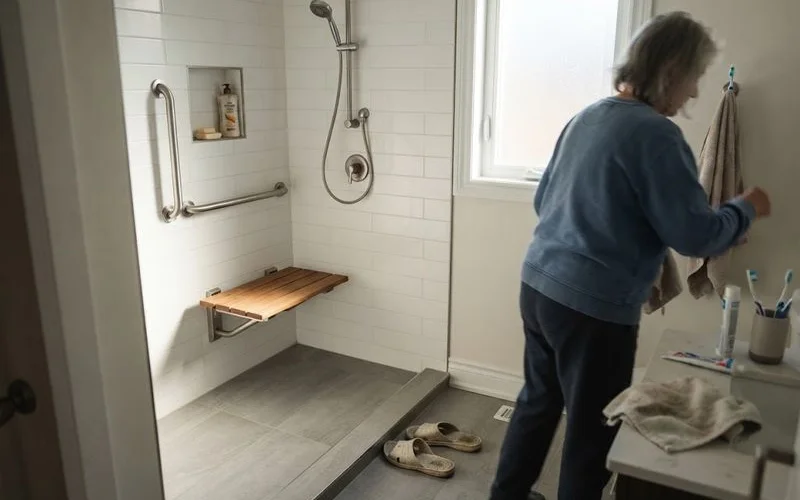
Both solve the trip hazard of a standard tub, but they work differently. A curbless shower has no step at all, which tends to suit a wider range of mobility levels, including future wheelchair or walker use. A walk-in tub still has a step-over threshold, lower than a standard tub but present, and the door needs to seal and drain before someone can safely get in or out, which some people find impractical day to day. Discuss both options with the person who’ll actually be using the space, since comfort and preference matter as much as the technical safety benefit.
Lighting and visibility
Good, even lighting matters more in an aging-in-place bathroom than most people expect, since reduced vision and depth perception are common with age and increase fall risk in a poorly lit room. Layering task lighting near the vanity and shower with a nightlight or motion-activated light for nighttime trips reduces the odds of a fall during a groggy, half-asleep walk to the bathroom, which is a common time for incidents to happen.
Planning around someone still living at home
If a parent is currently living in the home, smaller upgrades, grab bars, a raised toilet seat, lever handles, can often be done with minimal disruption. A full renovation involving a new curbless shower typically takes the bathroom out of commission for part of the project, so plan for a temporary alternative, whether that’s a second bathroom in the home or a short stay elsewhere.
Talking through the changes with the person using the space
It’s worth having a direct, unhurried conversation with the person the renovation is for about what specifically feels difficult in the current bathroom, rather than assuming which upgrades matter most. Some people prioritize independence and privacy above all else, while others are more focused on reducing fall risk even if it means accepting some help. The best plan reflects their actual preferences, not just a generic accessibility checklist.
Finding the right contractor
Not every renovation contractor has specific experience with accessibility-focused work. Ask directly about past aging-in-place projects, and confirm they’re familiar with proper grab bar anchoring and code requirements for accessible fixtures. Contractors in our bathroom renovation category can be filtered and compared through this directory, and our methodology explains how experience and workmanship factor into their ranking.
A well-planned accessibility renovation isn’t just about safety today, it’s about extending how long someone can comfortably and independently stay in the home they want to be in. Visit Toronto Renovation Guide to compare vetted bathroom renovation contractors across the GTA.
FAQ
- What's the most important safety upgrade in an aging-in-place bathroom?
- A curbless or low-threshold shower with a bench and properly installed grab bars is usually the highest-impact change, since slips and falls in the bathroom are a common and serious risk for older adults.
- Do grab bars need to be installed in a specific way?
- Yes. They need to be anchored into wall studs or blocking, not just drywall anchors, since they're meant to bear real weight in an emergency. This is worth confirming with your contractor directly.
- Is a walk-in tub worth the cost?
- It depends on the person's mobility and preferences. Some people find the step-over height of a walk-in tub still difficult, while a curbless shower is often easier to use for a wider range of mobility levels.
- Can this kind of renovation happen while a parent still lives in the home?
- Often yes for smaller upgrades like grab bars and lever handles, though a full accessibility renovation involving a curbless shower usually requires the bathroom to be out of use for part of the project.