Do you need a permit for your home renovation in Ontario?
By Royce Soon · Updated 2026-07-13
Toronto Renovation Guide hears the same question from GTA homeowners all the time: permit rules trip people up, mostly because the answer depends on the specific work, not the project label. “Renovating a basement” might need a permit or might not, depending on whether a bedroom or bathroom is being added. This is general information, not legal advice, and your local municipal building department has the final word on any specific project.
Projects that usually need a permit
- Adding or moving plumbing fixtures
- Structural changes, including removing or altering a load-bearing wall
- Adding a bedroom, especially one requiring an egress window
- Finishing a basement with a bathroom or separate entrance
- Home additions or second-storey construction
- Electrical panel upgrades or significant rewiring
- New decks over a certain height or size
Projects that usually don’t
- Painting, flooring, or cabinet replacement with no layout change
- Replacing fixtures in the same location
- Cosmetic tile or countertop replacement
- Minor drywall repair
| Project type | Permit typically needed? |
|---|---|
| Cosmetic kitchen refresh, same layout | No |
| Kitchen renovation with moved plumbing | Yes |
| Basement finishing, no bedroom or bathroom | Sometimes, check locally |
| Basement finishing with bedroom or bathroom | Yes |
| Home addition or second storey | Yes |
| Bathroom refresh, same fixtures location | No |
| Structural wall removal | Yes |
Why this matters more than it seems
Skipping a required permit doesn’t just risk a fine while the work is happening. It can surface later, during a home sale, when a buyer’s inspector or lawyer asks for permit records that don’t exist for finished work. Insurance claims can also get complicated if an issue traces back to unpermitted electrical or structural work. None of this means every renovation needs a permit, but it does mean guessing isn’t a great strategy for anything involving plumbing, structure, or electrical. If unpermitted work later causes damage or a dispute, who’s actually liable often comes down to your contractor’s coverage.
What happens during an inspection
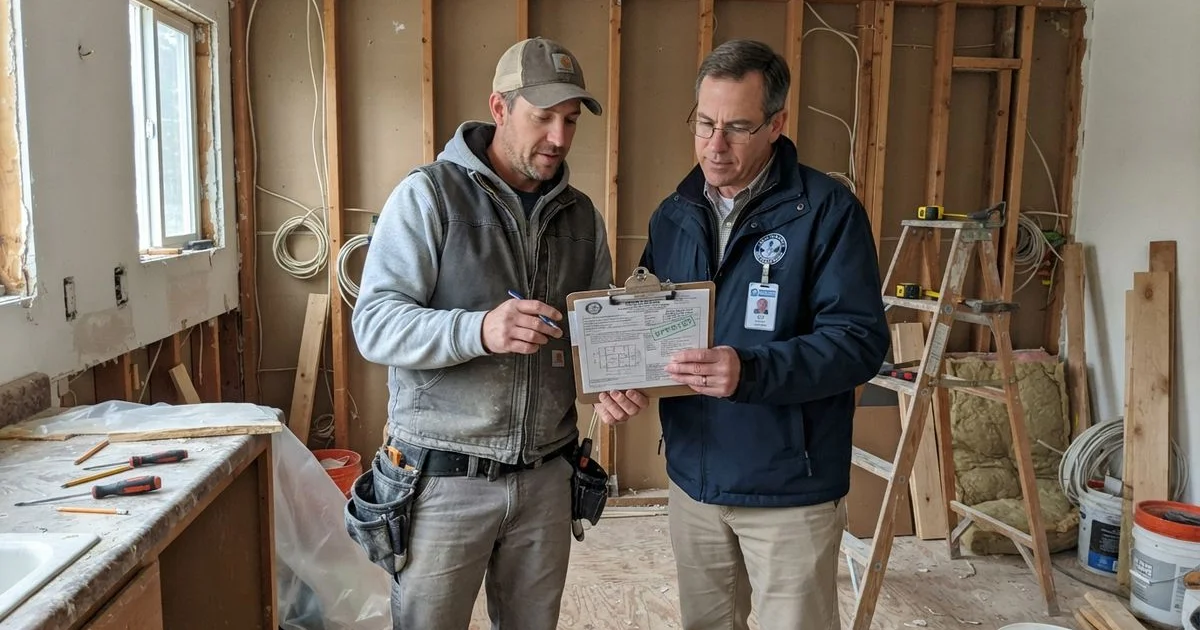
Inspectors check that the completed work matches the approved drawings and meets the building code requirements for that stage, not just that the work looks finished. A framing inspection, for example, happens before insulation and drywall go up, specifically because it’s the only point where the framing is still visible to check. This is exactly why covering framing or rough plumbing before an inspection is scheduled can mean opening the wall back up if an inspector later needs to see it.
What if you inherited unpermitted work
If you’ve bought a home and later discover finished work, a basement or an addition, without permit records, you have a few options: apply retroactively for a permit if the work still meets current code, hire an engineer to assess and certify existing work, or address it if you plan further renovations in that area anyway. Ignoring it is rarely the better option, since it resurfaces at resale or during an insurance claim regardless.
How the process generally works
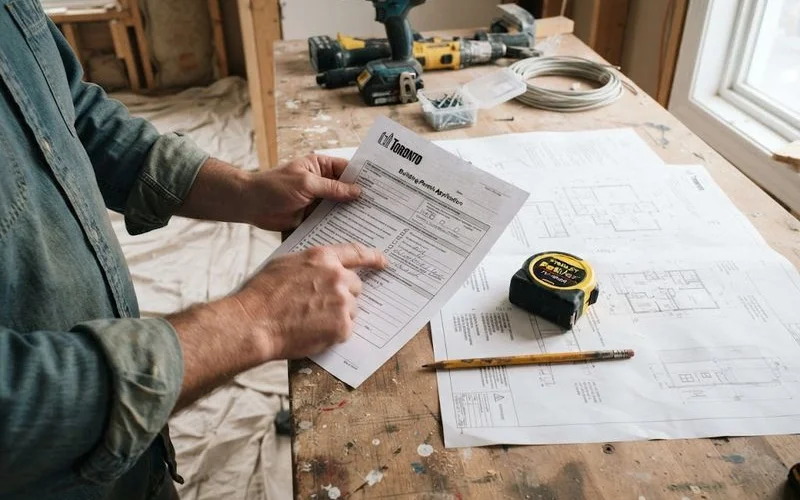
Most GTA municipalities require submitted permit drawings, sometimes stamped by an engineer for structural work, before issuing a permit. Once approved, inspections happen at set stages, framing, rough-in, and final, before the permit is closed out. Timelines vary widely by municipality and project complexity, so ask your contractor for a realistic estimate specific to your city rather than assuming a fixed number of weeks.
Whose job is it to apply
This should be spelled out in your renovation contract, not assumed. Many contractors handle the permit application as part of their service and build the cost and timeline into their quote. As the homeowner, you’re still the property owner of record, so it’s worth confirming the permit was actually pulled, not just promised, especially before finishing walls over any plumbing or electrical work.
Contractors listed across this directory are scored in part on how transparently they handle permit and compliance questions. Learn more in our methodology.
When in doubt, a five-minute call to your local building department is worth more than an assumption either way.
FAQ
- Do I need a permit to renovate a bathroom?
- A cosmetic bathroom refresh usually doesn't need a permit, but moving plumbing, adding a new drain, or altering structural elements typically does. Check with your local municipality before starting.
- What happens if I skip a required permit?
- You risk a stop-work order, fines, and having to open up finished walls for inspection later. It can also complicate a home sale or insurance claim if unpermitted work is discovered.
- How long does it take to get a renovation permit in the GTA?
- Timelines vary by municipality and project complexity, from a couple of weeks for straightforward work to several weeks or more for anything involving structural changes or an addition.
- Who is responsible for getting the permit, me or the contractor?
- Either party can apply, but it should be spelled out clearly in your contract. Many contractors handle it as part of their service, but the homeowner is still ultimately the property owner of record.