Renovate or build new: how GTA homeowners decide
By Royce Soon · Updated 2026-07-08
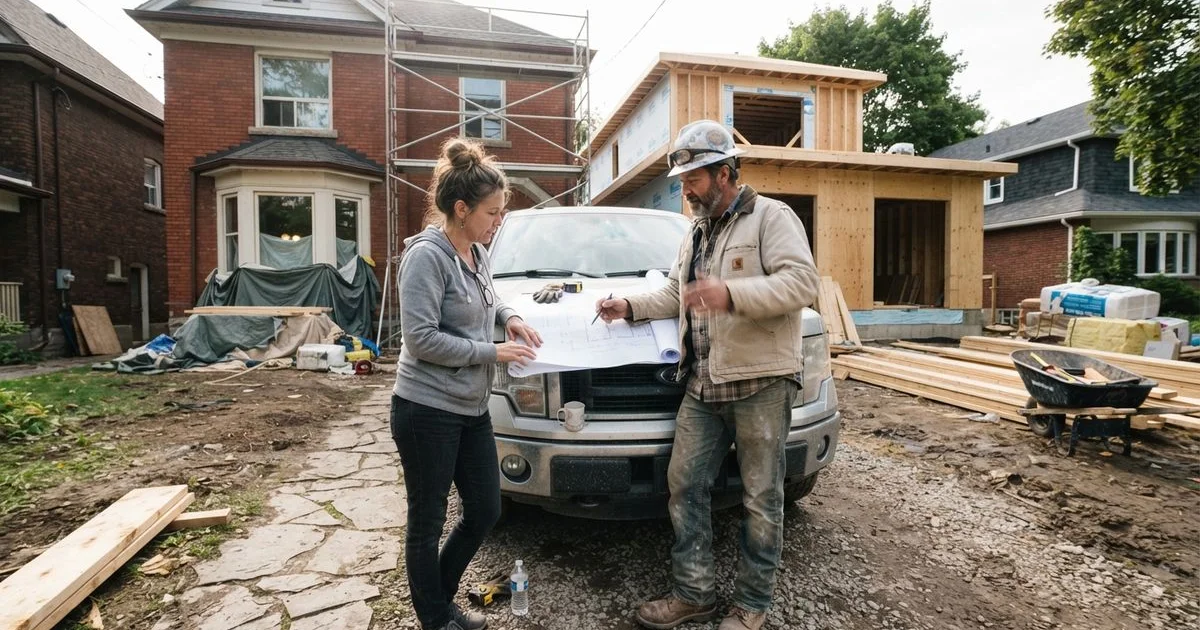
Some GTA homeowners reach the same fork in the road: the house is in the right location, but it no longer fits how the family lives in it. The choice then becomes whether to renovate what’s there or tear down and build custom. Both are legitimate paths, and the right one depends on the condition of the existing structure more than on taste.
The core trade-off
A whole-home renovation keeps the existing foundation and structure, and rebuilds the interior, and sometimes the exterior, around it. It’s generally faster and less expensive than starting over, provided the bones of the house are sound.
A custom build starts from a cleared lot. It gives full control over layout, structure, and systems, but adds demolition, a new foundation, and a design and permit process that starts from zero.
| Factor | Whole-home renovation | Custom build |
|---|---|---|
| Typical cost | Lower, keeps existing structure | Higher, includes demolition and new foundation |
| Typical timeline | Months | A year or more |
| Layout flexibility | Limited by existing footprint and structure | Full control |
| Permit complexity | Moderate | Higher, full new-build permitting |
| Best fit | Sound structure, workable footprint | Structural issues, or footprint genuinely too small |
When renovation is the better call
If the foundation and structural framing are in good shape, and the existing footprint can accommodate the layout you want (even with some walls moved), renovation is almost always the more efficient path. This is especially true for homes where the location itself, the lot, the street, the school catchment, is the reason you don’t want to move.
When a custom build starts to make more sense
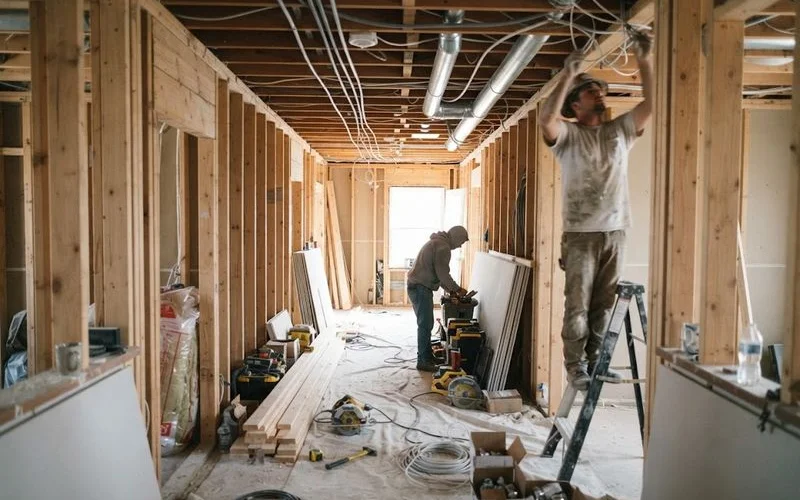
A custom build becomes the stronger option when the existing foundation needs replacing regardless of what else you do, when the house is genuinely too small for what you need even after a full renovation, or when the layout you want can’t be achieved without essentially rebuilding the structure anyway. At that point, renovating around a failing foundation can end up costing close to what a new build would, without the benefit of a clean design.
The permit and design timeline difference
A custom build requires a full new-build permit application, typically including stamped architectural and engineering drawings, a survey, and sign-off on everything from setbacks to servicing connections. That process alone can take a matter of months before a shovel goes in the ground. A whole-home renovation, even an extensive one, usually moves through a lighter permitting process since it’s working within an already-approved structure and lot use, which is a meaningful part of why the overall timeline tends to be shorter.
Living arrangements during the project
A whole-home renovation of any real scope will likely require moving out for at least part of the project, since major structural and systems work isn’t compatible with living in the house safely. A custom build removes this question entirely during construction, since the existing home can often be lived in right up until demolition, though that also means covering rent or interim housing for the entire build period rather than just the renovation period.
Questions that help settle it
Ask a structural engineer or an experienced contractor to assess the foundation and framing before deciding either way. Ask what the realistic livable square footage is if you keep the existing footprint versus what you actually need. And get a rough cost comparison for both paths from a contractor who does both kinds of work, since a firm that only builds custom homes may be inclined to steer you that way regardless of what your specific house needs.
Homeowners comparing builders through our custom home builder category should ask directly whether a firm also takes on whole-home renovations, since that answer often reveals which path they’ll recommend by default.
Whichever direction you land on, a first renovation checklist covers the sequence, budget, vet, contract, then build, that keeps either path on track.
Our methodology explains how we score and rank the contractors and builders listed in this directory.
Neither path is inherently better. The renovation-or-rebuild decision comes down to what’s actually salvageable in the existing structure, and an honest assessment of that is worth paying for before you commit to either direction.
FAQ
- Is it cheaper to renovate than to build a custom home?
- Usually, yes, for a whole-home renovation on an existing structure in good condition. A teardown and custom build carries the added cost of demolition, new foundation, and starting the design and permit process from scratch.
- When does a full renovation stop making sense?
- When the foundation, structure, or systems need extensive work regardless of finishes, or when the layout you want genuinely can't be achieved within the existing footprint and structure.
- How long does a custom home build take compared to a renovation?
- A custom build typically takes longer overall, often a year or more from design to move-in, compared to a whole-home renovation which can often be completed in several months depending on scope.
- Do I need an architect for either option?
- A custom build almost always needs one. A major renovation that changes the layout or structure often does too, while a cosmetic-only renovation usually doesn't.